
Choosing the Right Environment for Java
Finding the best Spring Boot hosting for production is a challenge that every Java developer faces eventually. While Spring Boot makes local development feel like magic, the JVM’s memory footprint and startup times require a hosting environment that understands how to treat Java applications as first-class citizens. After years of running various microservices, I’ve narrowed down the top-tier platforms that balance performance, cost, and maintainability.
Before you commit to a provider, ensure your application is ready for the cloud. If you are struggling with heavy artifacts, you might want to look at my spring boot dockerization guide to streamline your build process. Furthermore, if you are concerned about cold starts and memory usage, consider reading my spring boot native image graalvm tutorial to see how to shrink your deployment footprint significantly.
Managed vs. Unmanaged: What to Look For
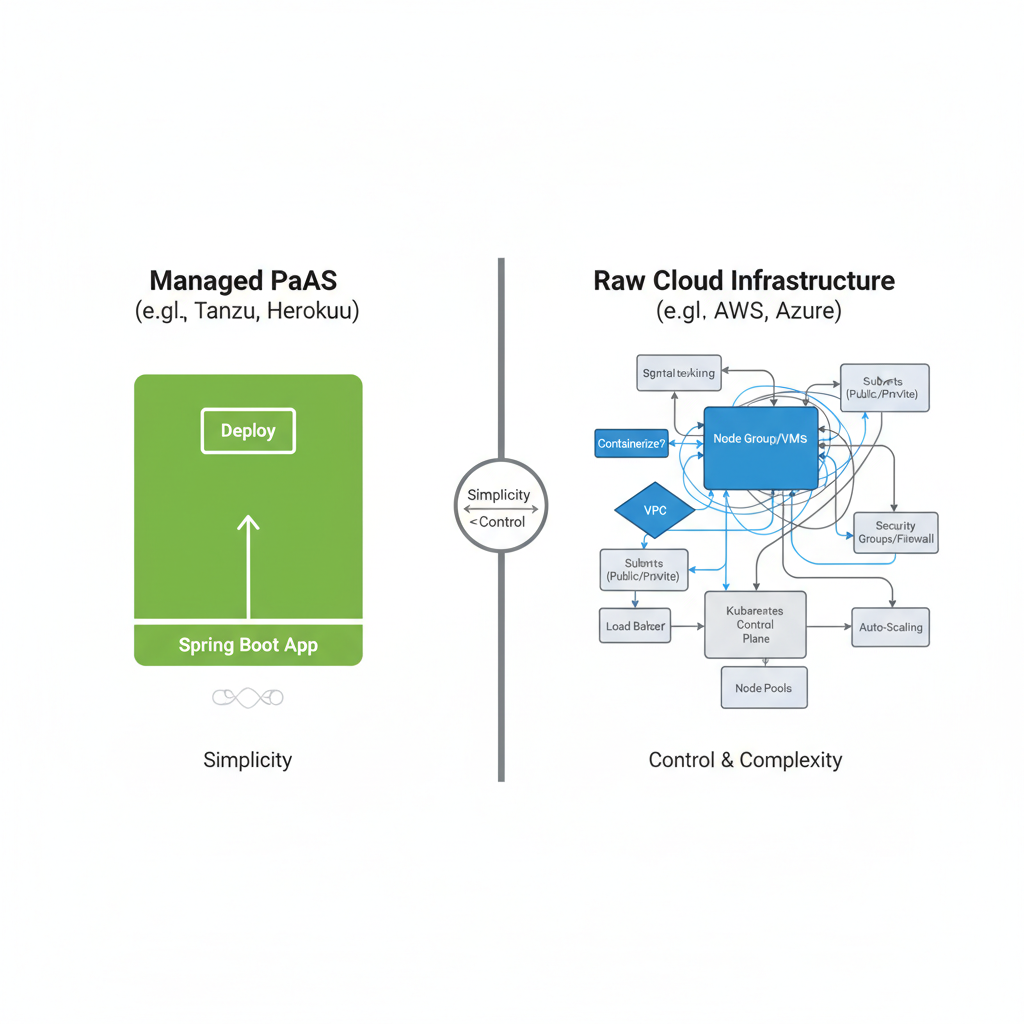
In my experience, production hosting usually falls into three buckets: PaaS (Managed), VPS (Self-managed), and Cloud-native (K8s). Here is what you need to evaluate:
- JVM Awareness: Does the platform offer automated heap dump analysis or memory profiling?
- Startup Time: Does the provider handle health checks efficiently during rolling deployments?
- Scaling: Can the environment trigger auto-scaling based on CPU usage or custom JVM metrics?
- Integration: Does it support your CI/CD pipeline out of the box?
Top Contender: Render
Render has become my go-to for many projects because it treats containers like first-class citizens. It provides a simple render.yaml approach to infrastructure that feels like modern DevOps.
Strengths:
- Zero-downtime deployments by default.
- Built-in support for private services (useful for internal APIs).
- Excellent integration with GitHub for automatic deploys.
- Transparent pricing that doesn’t hide behind complex cloud calculators.
- Managed Postgres databases that include backups.
Weaknesses:
- Lack of complex autoscaling rules compared to AWS.
- JVM monitoring tools are more basic than Datadog or New Relic integrations.
- Startup times can be slow if you aren’t using native images.
Comparison: Cloud vs. PaaS
As shown in the table below, the choice depends on your team’s size and ability to manage underlying infrastructure:
| Feature | Render (PaaS) | AWS (EKS/EC2) |
|---|---|---|
| Setup Effort | Low | High |
| Control | Moderate | Total |
| Cost Predictability | High | Low |
| Maintenance | Minimal | Significant |
Best Spring Boot Hosting for Production: My Final Verdict
If you are a solo developer or a small team, avoid the “Cloud Tax” of AWS and start with a managed provider like Render or Railway. Focus on optimizing your application footprint first—if you can optimize your memory usage, even the most budget-friendly instances will perform reliably in production. Don’t over-engineer your infrastructure until your traffic actually demands it.
Frequently Asked Questions
Official resources for Best Spring Boot Hosting for Production
Documentation and references for Best Spring Boot Hosting for Production:
