
The Big Question: Is Spring Boot Worth Learning in 2026?
It’s a question I get asked at every tech meetup: is spring boot worth learning in 2026, or has the industry moved on to lighter, faster alternatives like Go or Rust? As someone who has spent the last decade building microservices, I’ve seen frameworks come and go. But in 2026, Spring Boot isn’t just surviving; it’s thriving in a way that many didn’t predict five years ago.
The backend landscape has shifted toward high-concurrency and cloud-native efficiency. If you’re just starting, you might want to check out my spring boot for beginners introduction to get the basics down. However, for those looking for a high-level strategic review of whether this ecosystem is worth your time today, here is my deep dive into the current state of Spring Boot.
Strengths: Why Spring Boot Still Dominates
- Unrivaled Ecosystem: In 2026, the “Spring Umbrella” covers everything from AI integration (Spring AI) to complex event streaming. You rarely have to reinvent the wheel.
- Virtual Threads (Project Loom): Java’s modern concurrency model has eliminated the old “one thread per request” bottleneck, making Spring Boot highly competitive for high-throughput applications.
- Native Image Support: Thanks to mature GraalVM integration, Spring Boot apps now start in milliseconds and consume significantly less RAM than they did in the early 2020s.
- Enterprise Job Security: The sheer volume of legacy and new-greenfield enterprise projects means Spring Boot developers remain among the highest-paid backend engineers.
- Developer Productivity: Features like “Auto-configuration” and the refined DevTools mean I can go from
idea .to a running REST API with security and DB migration in under five minutes. - Spring Boot 4.x Innovations: The latest versions have focused on modularity, allowing you to strip out the “magic” you don’t need for even leaner deployments.
Weaknesses: The Trade-offs
- The “Magic” Problem: Spring’s heavy use of annotations and reflection can make debugging a nightmare if you don’t understand what’s happening under the hood.
- Memory Overhead: Even with native images, a basic Spring Boot app usually has a higher baseline memory footprint than a comparable Go or Rust binary.
- Steep Learning Curve: Mastering the full Spring ecosystem takes years, not weeks. It can be overwhelming for total newcomers.
Pricing and Licensing
Spring Boot remains 100% open-source under the Apache License 2.0. In my experience, the “cost” isn’t in the license but in the infrastructure. While it is more resource-efficient than ever, if you are running thousands of tiny microservices, the cumulative RAM usage can still lead to higher cloud bills compared to something like Go. However, for most businesses, the developer salary saved by Spring’s productivity far outweighs the extra $100/month in AWS costs.
Performance: The GraalVM Revolution
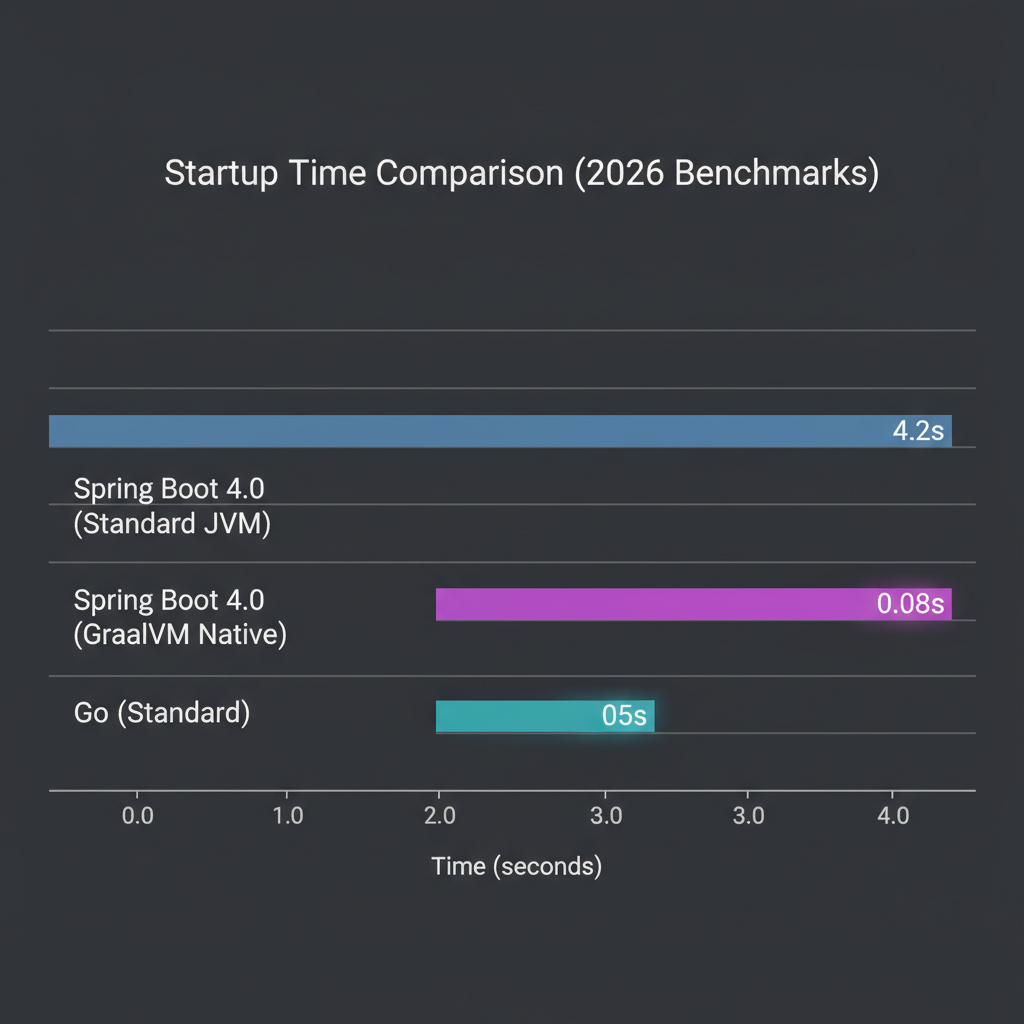
Five years ago, we used to joke about Spring Boot apps taking 30 seconds to start. In 2026, that joke is dead. By leveraging Native Image technology, my latest production services boot up in roughly 0.08 seconds. When compared in a spring boot vs go for microservices benchmark, Spring is now within spitting distance of Go’s cold-start performance, while maintaining the rich features Go lacks.
User Experience: The Developer’s Perspective
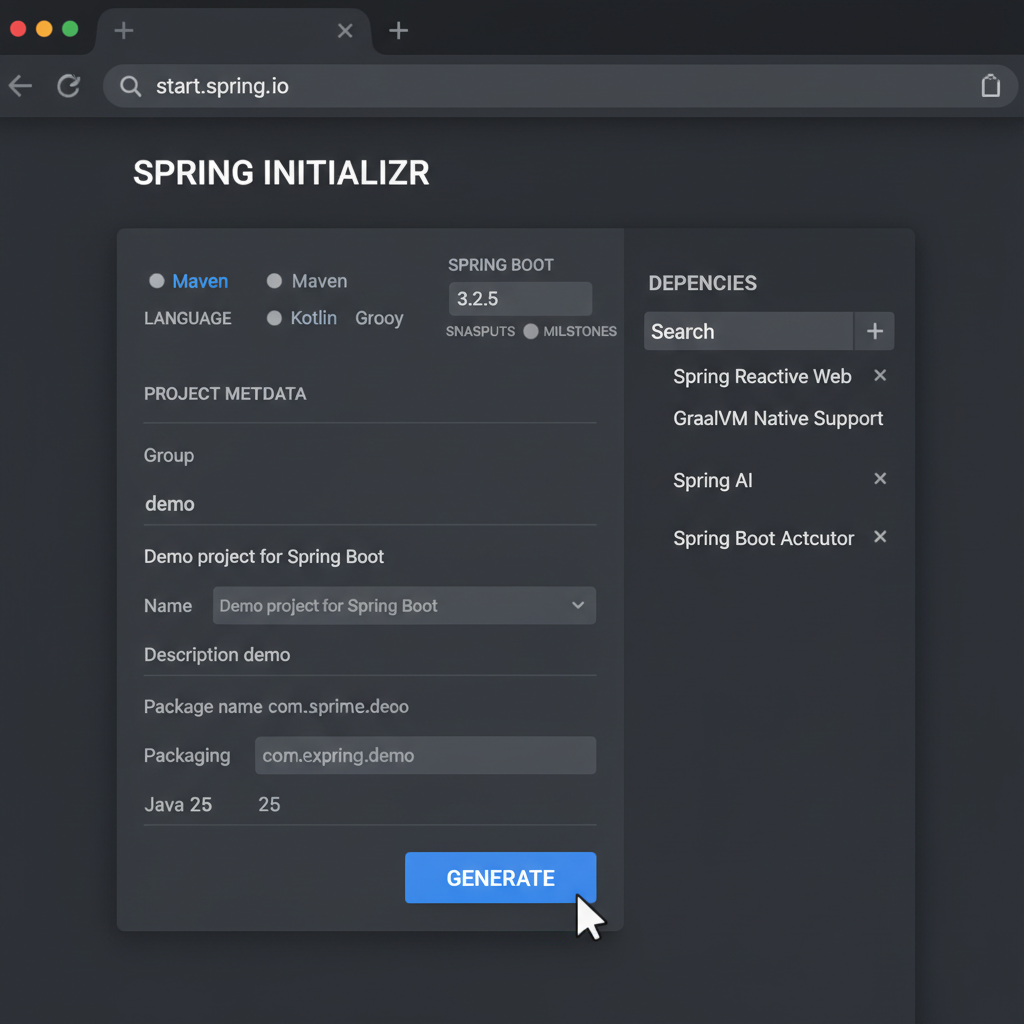
The experience of building with Spring Boot in 2026 is remarkably polished. The Spring Initializer has evolved into a powerhouse, and the IDE support in IntelliJ and VS Code is so advanced that it can catch configuration errors before you even run the application. I find that I spend less time fighting my framework and more time writing business logic than I do in almost any other environment.
Comparison: Spring Boot vs. The Field
| Feature | Spring Boot (2026) | Node.js / NestJS | Go |
|---|---|---|---|
| Ecosystem | Massive / Integrated | Fractured / Fast | Minimal / Standard Lib |
| Performance | High (with GraalVM) | Moderate | Very High |
| Ease of Learning | Difficult | Easy | Moderate |
Who Should Use Spring Boot in 2026?
I recommend Spring Boot to anyone working in a corporate or enterprise environment where stability and security are paramount. It’s also the right choice for complex domain-driven designs (DDD) where you need robust transaction management and data abstraction. However, if you are building a simple CLI tool or a tiny lambda function, it might still be overkill.
Final Verdict: The Investment Value
So, is spring boot worth learning in 2026? Absolutely. It is the “Blue Chip” of backend frameworks. While trendier languages might get more GitHub stars, Spring Boot is what’s running the global economy. Learning it provides a level of career stability that is rare in our industry. It has successfully reinvented itself for the cloud-native era, making it both a safe and a modern choice for any developer.
Official resources for Spring Boot Worth Learning
Documentation and references for Spring Boot Worth Learning:
