Introduction
In today’s distributed landscape, security is no longer a monolithic hurdle but a decentralized requirement. I’ve spent the last decade building microservices, and if there is one thing I have learned, it’s that getting your authentication flow right is the difference between a resilient system and a headline-making data breach. This spring boot security oauth2 resource server guide is designed to take you from a basic configuration to a production-ready security layer.
We will explore how Spring Boot 3.x and 4.x (looking ahead to our current 2026 standards) handle the heavy lifting of JWT validation, scope parsing, and method-level security. Whether you are using Keycloak, Okta, or a custom-built Authorization Server, the principles we discuss here remain the gold standard for backend engineering.
Fundamentals: What is a Resource Server?
In the OAuth2 ecosystem, the Resource Server is the gatekeeper. It doesn’t handle logins; it doesn’t issue tokens. Its sole responsibility is to receive a request, validate the Authorization: Bearer <token> header, and decide if the caller has the right permissions to access the requested data.
When I implement this, I focus on three core pillars:
- Statelessness: The server doesn’t store sessions; it trusts the signed token.
- Validation: Ensuring the token hasn’t expired and was signed by a trusted issuer.
- Authorization: Mapping token “scopes” or “claims” to internal application roles.
Following spring boot security best practices is essential here to avoid common pitfalls like over-privileged tokens or improper clock-skew settings.
Deep Dive 1: JWT Decoding and Validation
The heart of any modern Resource Server is the JSON Web Token (JWT). By default, Spring Security uses the NimbusJwtDecoder to handle this. In my experience, the most common issue developers face is the ‘Issuer URI’ mismatch. Your application needs to reach out to the .well-known/openid-configuration endpoint of your auth provider to fetch the public keys (JWKS) required to verify the token’s signature.
spring:
  security:
    oauth2:
      resourceserver:
        jwt:
          issuer-uri: https://auth.ajmani.dev/realms/production
          jwk-set-uri: https://auth.ajmani.dev/realms/production/protocol/openid-connect/certs
By defining these properties, Spring Boot automatically configures a JwtDecoder that checks the iss, exp, and nbf claims. If your clock is even a few seconds off from the Auth server, requests will fail. I always recommend adding a 2-3 minute clock-skew allowance in your configuration to handle network latency.
Deep Dive 2: Managing Scopes and Authorities
OAuth2 uses “scopes” (like read:users or write:orders) to define what a client can do. By default, Spring Security prefixes these with SCOPE_. So, a scope of profile becomes the authority SCOPE_profile.
Often, I find that standard scopes aren’t enough. You might need to map custom claims from your JWT (like user_role or organization_id) into Spring’s GrantedAuthority list. This is where a custom JwtAuthenticationConverter becomes invaluable. Using a spring boot custom annotation example in conjunction with these authorities allows for clean, readable controller logic.
Deep Dive 3: Multi-Tenant Security
In 2026, many of us are building multi-tenant SaaS platforms. This adds a layer of complexity: how do you validate tokens from different issuers on the same resource server? You can implement a custom AuthenticationManagerResolver that inspects the iss claim of the incoming token and selects the appropriate JwtDecoder on the fly. This prevents ‘token-bleeding’ where a user from Tenant A could potentially access Tenant B’s resources if the keys were shared.
Implementation: Setting Up the Security Filter Chain
Let’s look at the actual Java configuration. I prefer the functional approach introduced in Spring Security 6.x+, as it provides a clear, DSL-like syntax for defining rules.
@Configuration
@EnableWebSecurity
public class SecurityConfig {

    @Bean
    public SecurityFilterChain filterChain(HttpSecurity http) throws Exception {
        http
            .authorizeHttpRequests(authorize -> authorize
                .requestMatchers("/api/public/**").permitAll()
                .requestMatchers("/api/admin/**").hasAuthority("SCOPE_admin")
                .anyRequest().authenticated()
            )
            .oauth2ResourceServer(oauth2 -> oauth2
                .jwt(jwt -> jwt
                    .jwtAuthenticationConverter(customConverter())
                )
            );
        return http.build();
    }
}
As shown in the technical reference below, the filterChain acts as the entry point for all incoming HTTP traffic, ensuring that unauthenticated requests never reach your business logic. If you encounter issues with this setup, check my guide on global exception handling to see how to return clean 401 and 403 responses instead of messy stack traces.
Principles of a Secure Resource Server
When building your server, keep these three principles in mind:
- Principle of Least Privilege: Only request the scopes your application actually needs to perform the task.
- Fail Fast: Validate tokens at the edge (like a Spring Cloud Gateway) before they ever hit your microservices.
- Rotate Keys: Never hardcode public keys. Always use the
jwk-set-urito allow your auth provider to rotate signing keys without breaking your app.
Tools for Implementation and Debugging
I rely on a specific stack to debug OAuth2 flows:
| Tool | Purpose |
|---|---|
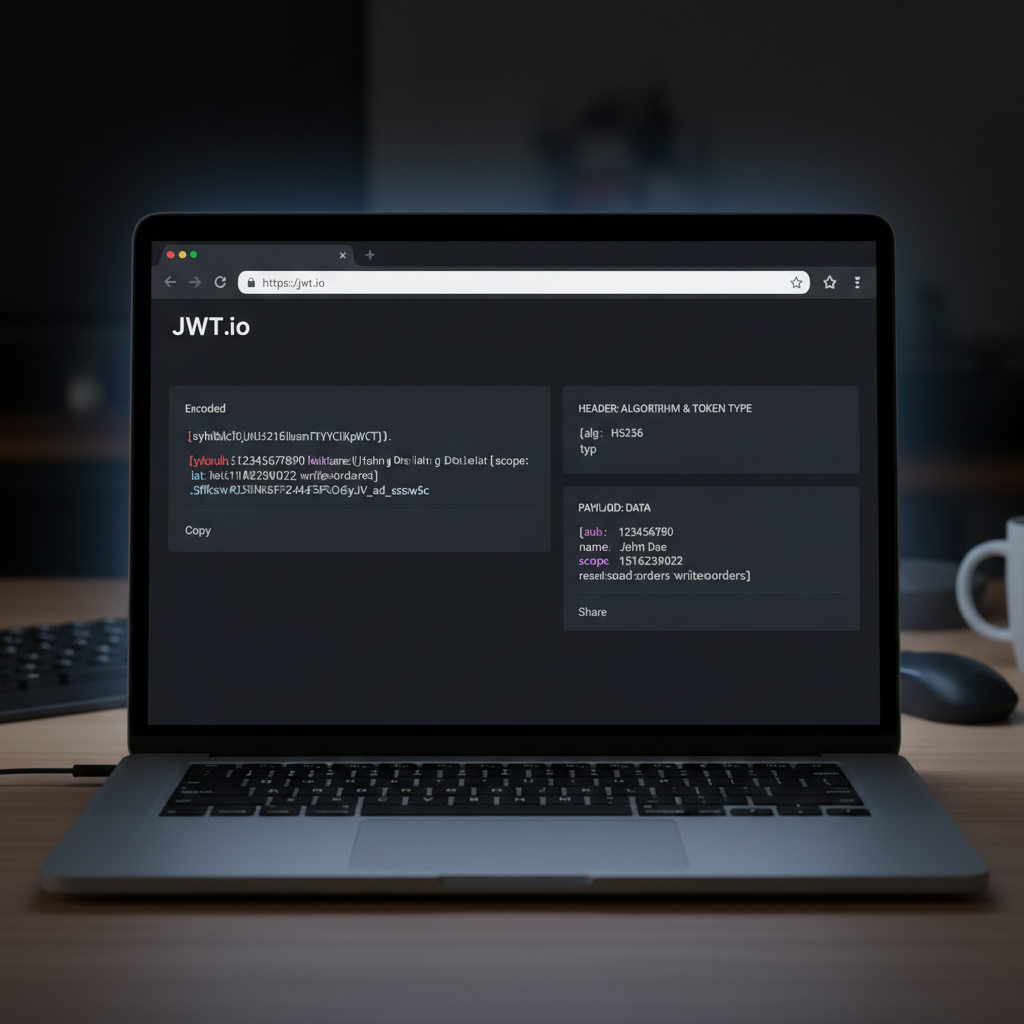
| JWT.io | Inspecting token payloads and verifying signatures manually. |
| Postman / Insomnia | Testing the OAuth2 ‘Authorization Code’ flow and managing Bearer tokens. |
| Keycloak | My preferred open-source Identity Provider for local development. |
| Spring Boot DevTools | Fast restarts when tweaking security filter chains. |
Using these tools alongside a solid unit testing strategy ensures that your security rules are not just theoretical, but verified with every build.
Case Study: Securing an Inventory API
In a recent project for a logistics client, we had to secure an inventory system where warehouse staff could read stock, but only managers could update it. By using the @PreAuthorize("hasAuthority('SCOPE_manager')") annotation on service methods, we moved the security logic out of the controllers and into the business layer. This ensured that even if a new REST endpoint was added, the underlying data remained protected by the same central policy.
Spring Boot Security OAuth2 Resource Server Guide: Summary
Building a robust system using this spring boot security oauth2 resource server guide involves more than just adding a dependency. It requires a deep understanding of how tokens flow, how authorities are mapped, and how to handle the nuances of modern identity providers. Start small, validate your tokens, and always follow the principle of least privilege.
More on this topic: Developer security tools, every comparison and guide in one place.
Official resources for Spring Boot Security OAuth2 Resource Server Guide
Documentation and references for Spring Boot Security OAuth2 Resource Server Guide:
